Showing posts with label self-improvement. Show all posts

Monday, June 01, 2015

Eureka! (Or Rather, "Duh!") - Discovering A Distinction That I Probably Already Knew

I have perplexed myself for years with a disconnect between thoughts and actions. I don't remember when I first noticed that certain mental occurrences that I thought were decisions really weren't, because decisions issue in action. Decisions are what you do, not what you think about, not what you wish for.

After all, the Latin roots of "decide" mean, "to cut off," as in, "to cut off other possibilities," or "to cut off further consideration." Decisions end discussions, including internal ones.

Anyway, ever since that making that realization, I've wanted a word to describe mental occurrences that feel like decisions, but aren't. It just now struck me that the word has been in my vocabulary forever: choices. Once you've decided, you've decided, but you can choose and re-choose forever.

Choices change, decisions don't.

At least, that's what I'm going to work with until I find a better formulation. From now until then, my encouraging word to myself is:

Make fewer choices, and more decisions.

Wednesday, May 13, 2015

Molehill, Mountain, Meaning: An Encouragement To Ecstasy.

This post is about a computer issue. And about an approach to dealing with computer issues. And about approaches to life.

It's 7:43 p.m., and I have spent hours today - HOURS - trying to solve a problem that isn't truly important. At no point did I consider it truly important. On the contrary, it seemed so trivial that I was slow to realize that it could take, and was taking, HOURS.

Here's the deal: I have an old 2GB flash drive that I wanted to place in service as virtual RAM, using a program built into Windows 7 called ReadyBoost. I had learned about ReadyBoost in a Tech Republic article, "10 Ways To Speed Up Windows 7."

Using ReadyBoost involves having the computer write information into a cache file on a flash drive. The program offers the option of dedicating the flash drive solely for that purpose, and that's what I wanted to do. Doing that would involve moving any information that I cared about off the drive, then formatting it - a process I executed with four other flash drives with no problems (ReadyBoost can support up to eight devices to provide up to 256GB of cache memory).

And this is who I am: I'm not the true geek, the guy who would have read up on ReadyBoost back in 2010 (assuming that he was dealing with Windows at all in 2010, as opposed to OSX or Linux). I'm the guy who discovers it five years later, and thinks, "Cool! I can finally do something with all some of these flash drives I have lying around." (Don't even ask me about floppy drives).

So, I get four flash drives up and running with ReadyBoost, adding some 28 gigs of cache to my machine. Then I get to this guy:


...it's a no-name drive that I picked up years ago as a piece of swag at some event or another. At some point, I used it to back up some files, which still reside on it, and which I was prepared to delete.

Except that I couldn't. When I tried to, I got an error message saying that the drive is write-protected. 

I have no idea how it became write-protected, but I thought that would be a minor issue. Surely, when I switched over to my administrator account, I would find a software toggle - a button, a check box - that would let me turn off the write-protection, right?

Wrong.

After poking around everywhere I knew to look, I launched into the Web to see what wisdom it would yield, being certain that others had encountered and solved this very issue. (And that, friends, is what the Web is good for. Truly.)

Turns out, there's tons of info about this issue. First up, a piece that appeared on PC Advisor's website just days ago, by +Jim Martin, clear and nicely detailed. It essentially offers two options: first, editing the Registry; then, if that doesn't work, using a command-line utility called DiskPart that has been long been a part of Windows.

The geek wannabe in me got something of a thrill from the opportunity to dive tiptoe into the Registry, but was frustrated when the tweak didn't work, but then got a new warm fuzzy from opening a terminal window with cmd.exe...

Ah, the joys of the command line - the sense of power, the call to precision, the...

Wait. What???


"DiskPart has encountered an error"? How in the world can a lowly flash drive defeat DiskPart??

WHAT IS GOING ON???

This story is getting long in the telling; imagine how much longer it was in the living.

Back to the Web, then. I came across a recommendation for a program called Restore, from Patriot Memory. I downloaded it, ran it, and it responded with, "Device Not Found."

Then I saw that someone else had a good experience using WinZip to clean a write-protected flash drive. I followed that person's steps. I did not get that person's results:


ARRGGHH!!! I KNOW, I KNOW!!!

*************************

And this is where it stands: I spent something like four hours today on a problem that I expected to solve within 10 minutes. On the one hand, a pat on the back to me for persistence, and for taking a fairly disciplined approach to seeking a solution by simply walking through a series of options. That's a geeky, hacker-ish way to go at it, and as a geek wannabe, I'm kinda proud of myself for taking that approach.

More than that, I think today's activity provided me a good example of how to deal with problems generally. I have always tended to avoid problems, or to operate in denial of them, or to let them paralyze me, or to get upset about them - none of which responses helps to solve them. I consider the approach I took today to be a step in a better direction - one that I would do well to replicate in future.

But I would have done even better to have stepped out of my own head sooner. Since ecstasy, as I've said before, is the state of standing outside oneself, I'm going to give us all a verb for the act of stepping outside oneself: ecstasize. I would have done better to have ecstasized sooner, to have stepped out of my own head enough to say, "This problem is not worth this amount of time right now."

By not making that evaluation, I allowed a molehill to become a mountain today. I started off not considering the problem to be truly important, but ended up acting as if were. And now, at 9:21, the sun's long gone, and I want to dredge the most useful meaning I can from that mountain before heading up for dinner. And I think it's something like this:

The ability to ecstasize - to stand outside of oneself at any given moment - is hugely valuable. Once you're outside of yourself, it becomes easier to evaluate, not only your circumstances, but your own behavior and thoughts and emotions. And then, to change direction instantly.

Or, to render alliterate advice: ecstasize your mind, evaluate your circumstances, your actions and your state, then excercise your will to choose change.

All of that can happen in minutes, if not within seconds, with no physical effort, and with who-knows-what potential benefit. Today's meaning, today's lesson, is that I need to start, now, ecstasizing more - indeed, to begin forming the ecstasy habit. Because...

...better is never more than a thought or two away.

Monday, March 23, 2015

FALLing Forward: A Process For Progress After Failure

Today, +Terry Doloughty stopped by. It was a followup to an earlier visit in which he and some other friends helped me to unload a chiffarobe that I had brought up from Louisville.

The chiffarobe had belonged to my Dad, and after he passed, I told Mom that it was the only thing of his that I wanted. Mom passed in May, and I went down to pick up the chiffarobe in November.

Loading, transporting, and unloading it turned into much more of an adventure than I anticipated or would have dared imagine, partly because it was missing a wheel and when you tried to move it across the floor, it tilted, and pieces that were held together by tongue and groove worked themselves loose and ultimately my friends and I wound up disassembling and reassembling the thing in my office.

After that, I ordered a pair of wheels online. Tonight Terry installed them. The chiffarobe now sits even - as much as it can on a sloping floor.


None of this has anything to do with what this blog post is about, except that the idea for it popped into my head while Terry and I were working with the chiffarobe.

The idea was a two-word phrase: "fall forward." Or rather, "FALL Forward."

You ever have stuff come to your mind so quickly and completely that you don't even feel like you *thought* of it - that it feels like it just arrived?

"FALL forward" did that. Suddenly I saw an acronym for breaking free of a persistent pattern in my life.

The imprisoning pattern is -

  1. I mess up in some way: I miss a deadline, I fail to keep a promise. I do or say something that I should not have done or said.  Something.
  2. I procrastinate on doing what I could do to fix the situation, partly because I am too busy with #3...
  3. I feel bad about the failure. Like, I work at feeling bad about it. I avoid the other person(s) involved, feeling certain that they now hate me. This persists indefinitely until...
  4. I reconnect with the other person(s) involved, apologize, and if there is still something to be done, go ahead and do it (those items are not necessarily in that order).
When the phrase "FALL Forward" popped into my head this evening, this was the acronym that it contained for breaking free of that pattern:

  1. Forgive yourself. Making this the first step in the process makes it easier to do #2, and thus prevents the endless cycling of #3 above.
  2. Ask forgiveness of the other person(s) involved. You don't have to tell the entire story and history of what lay behind the failure/mistake/sin. Just acknowledge it, apologize and do what you can (if anything) to repair the damage.
  3. Learn from the experience - intentionally and deliberately. Set aside time, sit down with pen and paper, or keyboard and screen, ask yourself, "What can I learn from this?" and don't stop writing until you feel like you've exhausted the lessons from the experience.
  4. Let it go. Really. We all make mistakes or commit sins of varying degrees of severity. Once you've done #s 1-3, rehashing stuff doesn't create additional value for anyone. Let it go. Move forward.
FALL forward.

That's it. I told Terry that I thought it could make a nice short talk, or a booklet, or even a 200-page book for the self-improvement section of the bookstore. All it needs is lots of quotes and anecdotes.

What do you think?

Wednesday, January 07, 2015

If Only I Were Always This Smart, About Everything

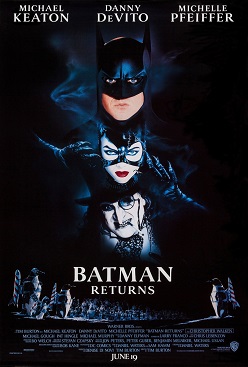
A couple of nights ago, I had an odd and interesting experience: as I was flipping through TV channels, I stopped at a movie - and IMMEDIATELY recognized both the visual style and the style of the accompanying music. When I say immediately, I mean within five seconds. I drew a blank on names for a few moments, so what I said to myself was, "This is by the Edward Scissorhands guy." But it wasn't "Edward Scissorhands." Nor was it "The Nightmare Before Christmas," which the imagery and music also brought to mind.

When Christopher Walken appeared, that didn't help. Then I saw penguins, and it clicked - Batman. More precisely, "Batman Returns." Directed by Tim Burton, music by Danny Elfman.


What made this odd and interesting (to me, at least) is that I had never seen "Batman Returns." In effect, I recognized something I had never seen before.

How? By its strong resemblance to what I had seen.

It got me thinking about the whole business of how shockingly efficient our brains can be sometimes at recognizing patterns, even when we don't know consciously know what those patterns are. Can I tell you precisely what made me recognize Burton's hand in the visuals? Not beyond some generalization about twistily deformed objects. Can I name the elements of Danny Elfman's musical language (which first won my affection in the theme for the campy TV series, "Tales of the Crypt")? Um, quivering quavers and discordant chords? Can't say that I have a lock on it.

But I knew.

And that - the ability to simply know things sometimes, more quickly than I can figure them out - delights me.

But I've said that before - at the same time that I also asked a question that I want to repeat now: "...are there ways to train my brain to make more of those connections?" I'm not sure how useful that ability is; but maybe it would be more so if I cultivated it.

Can it be cultivated? I need to look into that - say, after I get the hang of box breathing and speed reading.

Have you had moments in which your brain worked surprisingly well? Do you wish you could have more? Better yet, have you learned how to have more?  Any reading suggestions?

Sunday, August 10, 2014

The Night My Brain Exploded

(ALERT: NSFW language)

Here's a story:

My mom passed away on May 14, and we held her funeral on Tuesday, May 20. That night, I went to bed around 12:30. That's early for me - I wanted to be well rested for the drive back on Wednesday.

I don't know when Janet came to bed; that didn't rouse me. But when she came back to bed after getting up to use the bathroom, I woke up.

I did not wake up drowsy and tired. I did not wake up merely refreshed. I woke up surging with energy, feeling as if I were ready to explode, because of the dream I had just had. I said something to Janet about wondering whether I should tell her about the dream, but I needed to go to the bathroom.

Dreams fade quickly; by the time I wrote about the dream in my journal, some details had faded. But it went something like this:

I was, it seemed, a new employee in the marketing department of a large company. And somehow I was chairing a meeting of honchos. And I left the meeting and ran into someone from the design department - bumped into him so that he dropped his stuff - and as I was helping him pick it up, either I saw this phrase on one of his papers, or he spoke it: "Change the fucking world."

And it penetrated like a bullet, and set me on fire.

And I went back to my meeting, which was running late, or running long, or both, and instead of feeling scared because of that or apologizing for that, I went in with total swagger because it didn't matter that the meeting was late or long or both, what mattered was that we were going to change the fucking world. And I said so.

And I saw "change the fucking world" becoming a global mantra, with me as chief guru for the attendant movement. I saw myself, like Anthony Robbins (Has he stopped being "Tony"?), onstage in an auditorium filled with thousands - no, tens of thousands - pouring out verbal fire to help them change themselves so that they could change the fucking world.

I saw T-shirts emblazoned with a four-color logo: CTF*W. I saw bumper stickers with the same. Coffee mugs.

I saw myself re-ordering my personal relationships, putting family, friends and acquaintances on notice: "I want people around me who want to change the fucking world. If you don't want to change the fucking world, that's okay - but I gotta ask, 'Why not?'"

And there was was music - a throbbing anthem for full orchestra, led by brass.

And I woke up ready to change the fucking world, NOW.

On my way to the bathroom, I glanced at the wall clock in the kitchen and thought it said 6-something, and concluded that I may as well stay up, because there was no way that I could fall back asleep. I'd do better to start getting ready to leave - I felt like I could drive a thousand miles.

The music was filling my brain, along with the images of T-shirts and bumper stickers and me onstage before tens of thousands ("Now get outta here, and CHANGE THE FUCKING WORLD!" Crowd roar: "YEAAAHHHH!!!"). And, and...

I was linking "Change the fucking world" to the call of Christ and the identity of the Christian:
For we are God's handiwork, created in Christ Jesus to devote ourselves to the good deeds for which God has designed us.     (Ephesians 2) 
"We're created in Christ Jesus to change the fucking world," I said.

And all of this is happening on a trip to the bathroom, and I want to ACT, so I pick up my phone to check the availability of the website address, changethefuckingworld.com, and I see that...

...it's 3:26 a.m.

WHAT???

I was totally jazzed emotionally, I was almost exploding with physical energy, and my mind was focused like a laser and racing like a lightcycle...

...on three hours of sleep????

I immediately wanted to know, "What brought about this phenomenal state, and how can I get it again?"

My best guess, then and now, is that my state was fueled by having drank multiple glasses of punch at the funeral meal, followed by two cans of Pepsi later. Both my body and brain may have been sent into overdrive by sugar and caffeine.

That answer's a bit disappointing, as I don't want to make massive doses of sugar and caffeine parts of my regular diet. But the question of how to place myself at will into a state of high energy, high confidence and high clarity remains intriguing, to say the least.

It's also possible that my state was fueled in part by a heightened awareness of mortality. I was already working at maintaining an awareness of mortality, so to the extent that that may have been a factor, re-experiencing the state would just be a matter of getting better at that.

For now, I am finding that the very act of recalling the event elicits at least an echo. I do, in fact, want to change the fucking world (tm).

No. Not "want to."

Intend to.

Friday, March 14, 2014

Memo to myself, 20140314: DO TODAY

Try this for the remainder of this month: DO TODAY.

Plan the week. Plan the month. Plan the quarter. Plan the year. Plan the next five years.

But do today.

Do not look at the weekly calendar while doing. Look at today's.

Do not even look at tomorrow's to-dos, until you have done today's.

Do not even look at yesterday's to-dos, until you have done today's. If there are to-dos left over from yesterday, begin working on them AFTER you have done today's.

Plan long-term, work short-term. In doing, let today trump tomorrow AND yesterday.

DO TODAY.

Sunday, November 03, 2013

The Power Of Deletion

I maintain a list of projects that I want to accomplish.

A couple of weeks ago, while reviewing the list, I realized that I no longer wanted to do one of the projects I had listed.. Perhaps the better word is not "realized," but "acknowledged." I think I had already realized it for a while.

When I acknowledged that, I then did something that was, for me, highly unusual.

I crossed it off my list.

Doing that felt good.

Many times, when I have failed to do something that I wanted to do, the failure resulted from a loss of will to do that thing, rather than from a definite decision not to do it. Indeed, the failure to do the thing intermingles with the continuing desire to do the thing in a convoluted fear-inducing mass of inaction. Weeks or months or years (yes, years) pass, during which the undone thing lingers in the mind, continually trying to call attention to itself: "Me! Do me!"

When I crossed Project X off my list a couple of weeks ago, it left my mind, and has not come back
.
To emphasize: I did not merely decide to demote the project from an intention to a possibility. I demoted it all the way down from an intention to a non-possibility.

To put it another way, I didn't modify it, and then save my changes - I deleted it.

And it felt really good.

And why should it not? In doing so, I exercised considerable power, of a sort that I will dub First Degree.

First Degree power is the power to choose what to think about. It's the power that precedes all others. As a man thinketh, and all that. It has long struck me as utterly remarkable that Paul, in his letter to the Phillippians, encourages them to choose what to think about.

By crossing Project X off my list a couple of weeks ago, I chose to avoid thinking about it any more - and therefore, to avoid the entire range of emotional and cognitive distress that further thoughts about it could evoke - from confusion about how to do it, to guilt about not having done it already, to fear of failure. And in doing that, I freed up all of the time and energy that I would have otherwise devoted to it.

Sometimes, deciding not to do something is the most powerful and liberating thing you can do.

Thursday, September 12, 2013

The Creed and Oath of the Lifelong Learner.

The Creed and Oath of the Lifelong Learner

I was born to learn.
Every cell of my body exists to support my brain in the work of learning, and to benefit from what it has learned.
Every relationship with every person in my life provides me an environment for learning.
Every experience provides an opportunity for learning.
With such an opportunity at hand daily, the refusal to learn is at best folly, and at worst sin.
THEREFORE...

When I fail, I will learn.
When I succeed, I will learn.
In every circumstance, I will learn.
From every person possible, I will learn.
When I envy someone, I will learn how they obtained what I wish I had.
When I disagree with someone, I will learn how they reached such outrageous conclusions.
When I have someone working against me, I will learn what makes them think I'm worth the trouble.
Every day, I will learn.

And because knowledge and wisdom both increase as they are shared, I will share what I learn, that I may better learn more, and bathe in the joy of learning with my fellow learners, whoever and wherever they may be.
And when learning is air and light and food and drink to me, then...
I will be unstoppable.

Friday, November 09, 2012

Memo to myself, 20121109

We all start out ignorant. Being stupid takes work. Remaining stupid in the same ways for a long time takes a lot of work.

Saturday, October 06, 2012

Memo to myself, 20121006

STOP waiting for someone else's
  • example,
  • instruction,
  • approval,
  • permission, or
  • help.
STOP waiting for the perfect
  • time
  • circumstances,
  • finances, 
  • partners, 
  • plan, or 
  • emotional state.
STOP pretending that any project, of any size, is anything more than a collection of small actions, many of them repetitious.

STOP preferring big thoughts to small actions, and GO.

With the smallest steps possible, GO, and KEEP GOING.

GO.

Wednesday, January 04, 2012

Note on an unfinished aria.

One night, as I was waiting for the bus to take me to work on the midnight shift as a data entry clerk at what was then Mellon Bank, I began composing an aria for Baron von Frankenstein.

I'm serious. I had had a conversation with someone who was working on a musical based on Mary Shelley's horror story, and I began imagining how one scene might go.

The scene takes place in Frankenstein's lab. The stage is crowded with the accoutrements of his madness. At the back, the roof of the castle gives way to a large sloping window, under which lies the bed in which the Baron collapses when he is too caught up in his work to go to his bedroom, but too tired to continue.

As the scene opens, he is in bed. Lightning flashes outside the window, and crashes of thunder give way to roiling cellos and ominous brass chords as he tosses, turns and finally wakes from his nightmare - which he strives to recall. In song, he describes the dark vision of a countryside laid waste, not just by his creature, but by a larger plague of terror and wrath. In the dream, he encounters a boy, no more than 12 years of age, who explains that all that the Baron is seeing has sprung from his own hand.

These are the last lines:

" 'This isn't what I wanted!'
And at his answer my blood froze:
'How peculiar, Baron Frankenstein -
for this is what you chose.'"

As imagined, that last line could produce the most chilling moment of the entire play.

Life is full of unintended consequences. Wisdom consists in large part of getting better at anticipating what results our actions might produce, beyond those that we intend - and even more so in learning to avoid or prevent results that we really, truly, deeply do not want. For even when our choices do not make unintended consequences inevitable, they make them possible.

Is the failure or refusal to consider possible unwanted consequences of one's choices, and to work at preventing them, a form of evil?